MPHS Health Science Students Begin Clinical Rotations
Students in the Mount Pleasant High School Health Science program have begun clinical rotations at Titus Regional Medical Center (TRMC) and various health care settings around the community. Third- and fourth-year health science students spend 1-2 days per week at field sites getting actual, hands-on training in everything from emergency medicine to labor and delivery to dentistry. Students have the opportunity to earn multiple medical certifications prior to graduating from high school.
Third year students will gain their very first hands-on experiences by observing and rotating through multiple field sites at TRMC. As these students gain experience and successfully complete tasks in the Health Science Skills Lab at MPHS, they can be approved to perform actual electrocardiograms (EKGs), take patient vital signs, observe the functions and organization of medical offices and the hospital, and have the opportunity to view live births, surgeries, and all other aspects of work in a hospital setting.
Fourth year students in the Certified Phlebotomy Technician (CPT) course and the Certified Patient Care Technician-Assistant (CPCT-A) course will be rotating through clinical sites throughout the hospital. “Students will be allowed to perform skills they have been checked off on in our skills lab,” said Health Science instructor, Kristi Houchin. “Such skills include venipunctures and dermal punctures, assisting patients with Activities of Daily Living (ADLs), performing EKGs, and taking patient vital signs. This experience allows students the ability to apply the knowledge and skills from the classroom to real life experience.”
Fourth year students in the Certified Clinical Medical Assistant (CCMA) course rotate through various sites at TRMC, TCOT (The Clinics of Titus) and other medical offices. Students in this program perform phlebotomy skills, take vital signs, room patients, practice data entry, run labs, learn instruments and sterilization procedures, experience medication maintenance, practice bed making, perform ADLs and basically get a hands-on approach to learning about all things medical. “We meet 5 days a week for a double blocked class with two of those days being opportunities to perform the skills they have learned and been assessed as competent,” said Health Science instructor, Amanda Hutchings. “The other three days are filled with completing their NTCC dual credit course, practicing skills, National Healthcare Association (NHA) benchmarks, and preparation of material for the credentialling exam that allows them to go into the work force after graduating. This not only prepares them for real life but also life as a college student.”
Health Science courses at MPHS are taught by industry experts with multiple degrees and certifications. Beginner students in Principles of Health Science can earn certifications in CPR, Stop the Bleed, and First Aid, and are taught by Heather Dill, RN. Advanced Practicum in Health Science I students are being trained to be Electrocardiogram Technicians (CET) by Sarah Carrell, LVN. Seniors in Practicum in Health Science II are either being instructed in Phlebotomy (CPT) and Patient Care Technology (PCT) by Kristi Houchin RN-BSN, or to be a Certified Clinical Medical Assistant (CCMA) by Amanda Hutchings MS-HSA, BS, CMA (AAMA).
“Our classes allow students the opportunity to see which areas of medicine they actually see themselves working in after receiving their degree,” said Hutchings. “Our certifications also allow students to immediately gain entry level positions in the medical field. I had a graduate last year that had been in a medical office during clinical rotations and the preceptor was very impressed. The student gained employment there while completing courses at NTCC to enter the nursing program. I have another graduate pursuing higher ed at UT Austin to become a medical researcher. This program isn’t about patient care only. From the ones who research to save lives to the ones who implement the research, every person at every stage in every area is important.”
For more information on the MPHS Health Science program, contact Career and Technology Director, Karl Whitehurst, at 903-575-2020.
Photos:
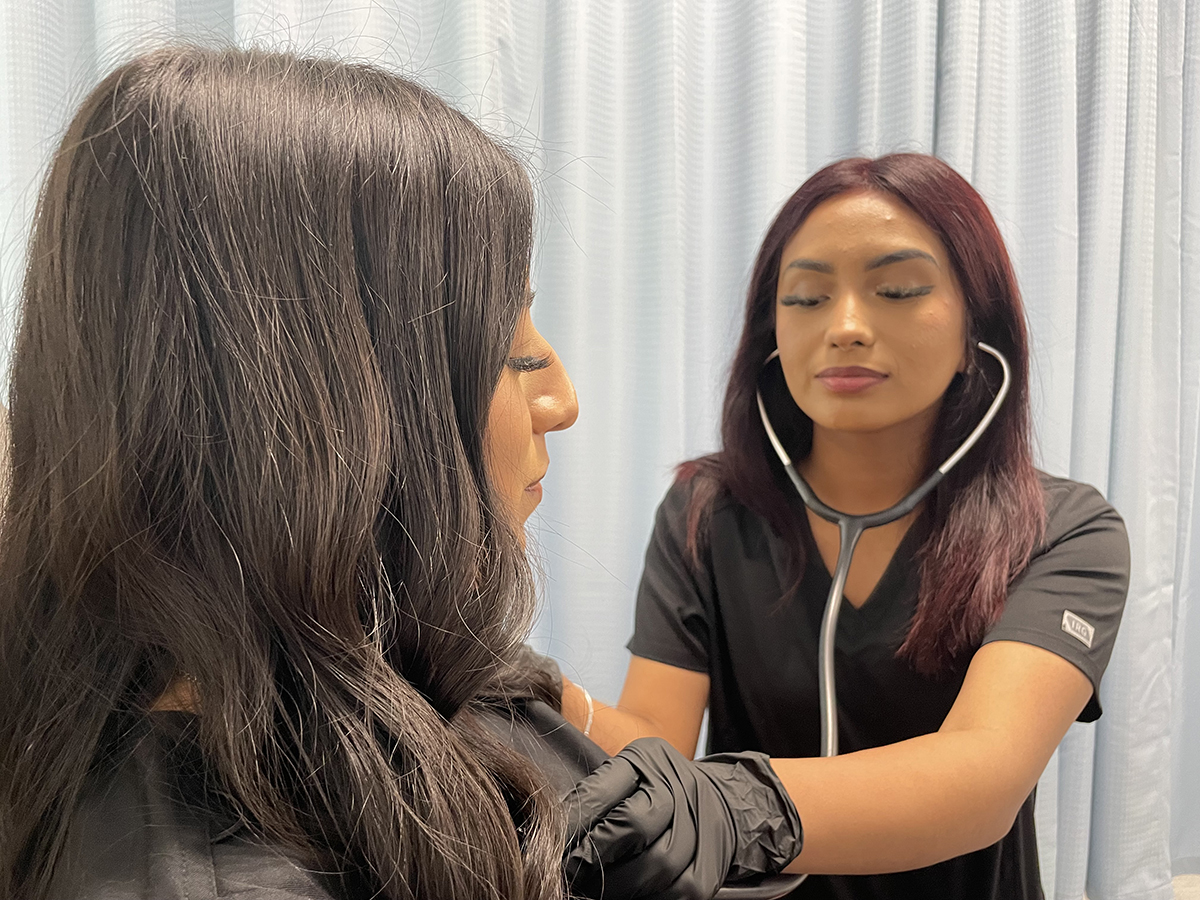
1: Fourth-year senior Genesis Aguilar (right) practices taking Silvia Lopez’s apical pulse in the Health Science Skills Lab at MPHS
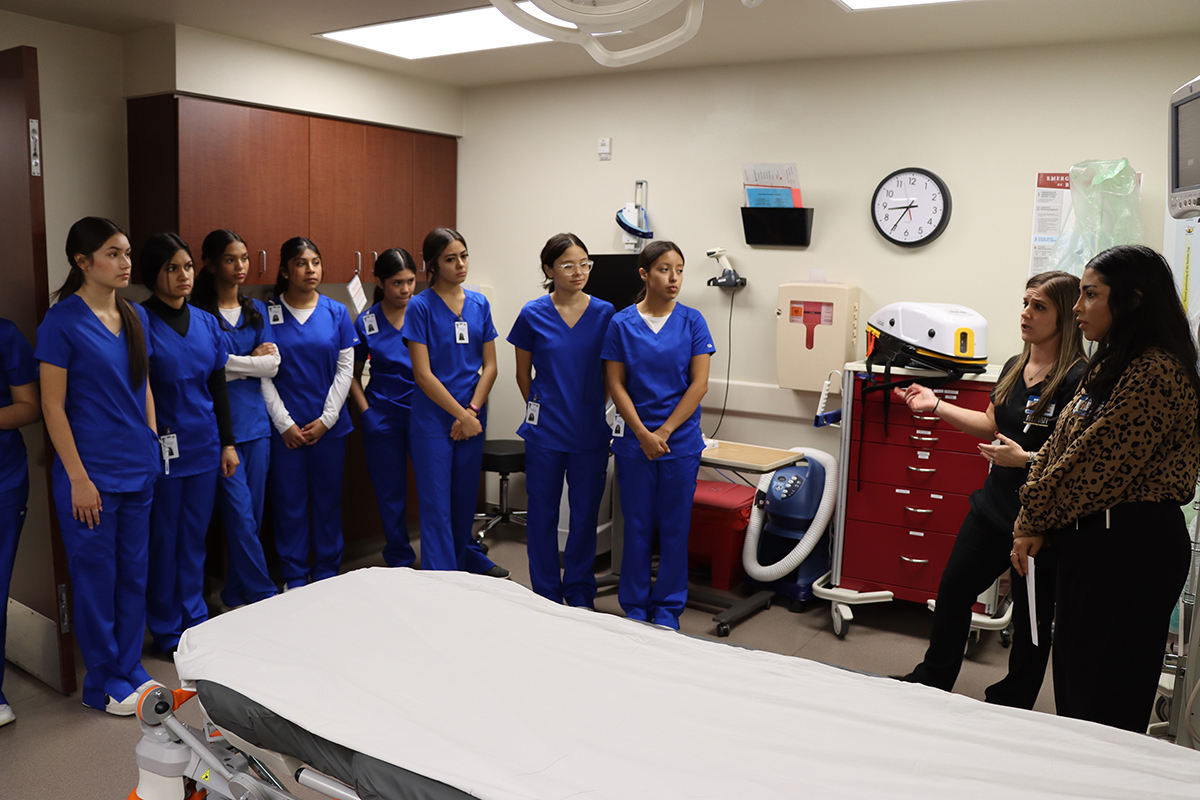
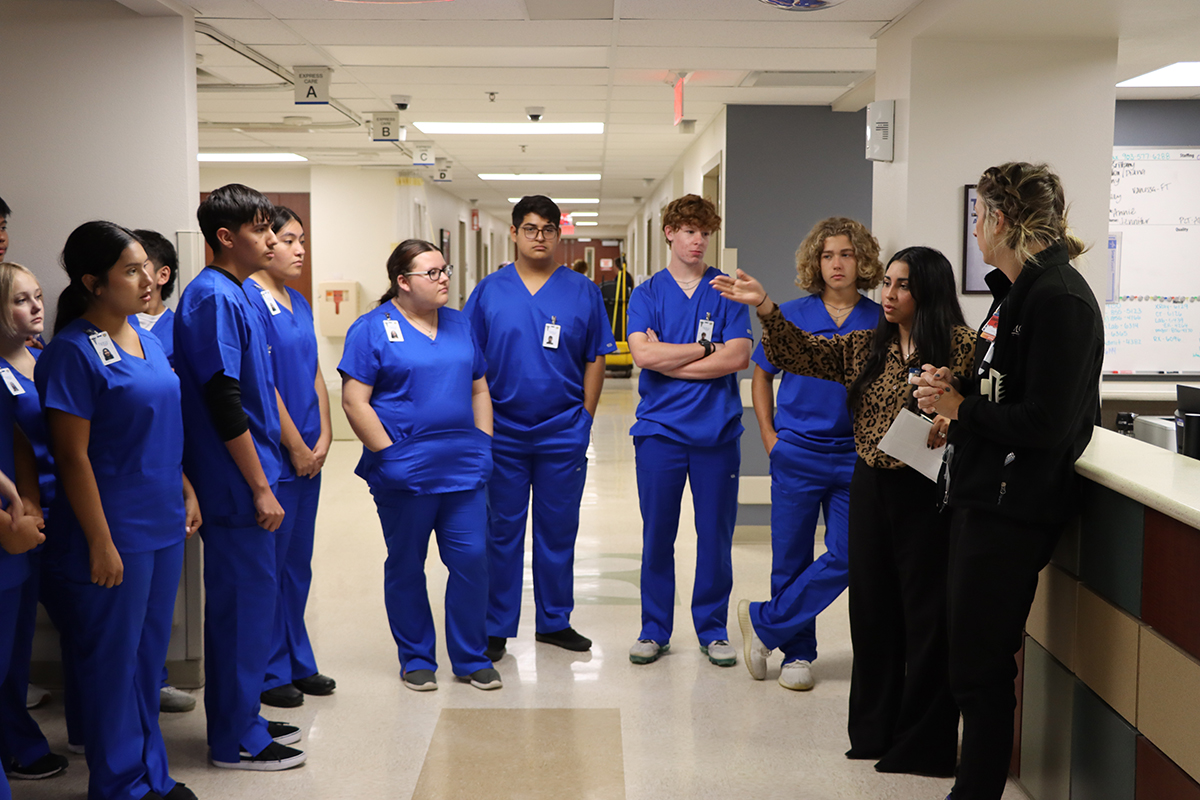
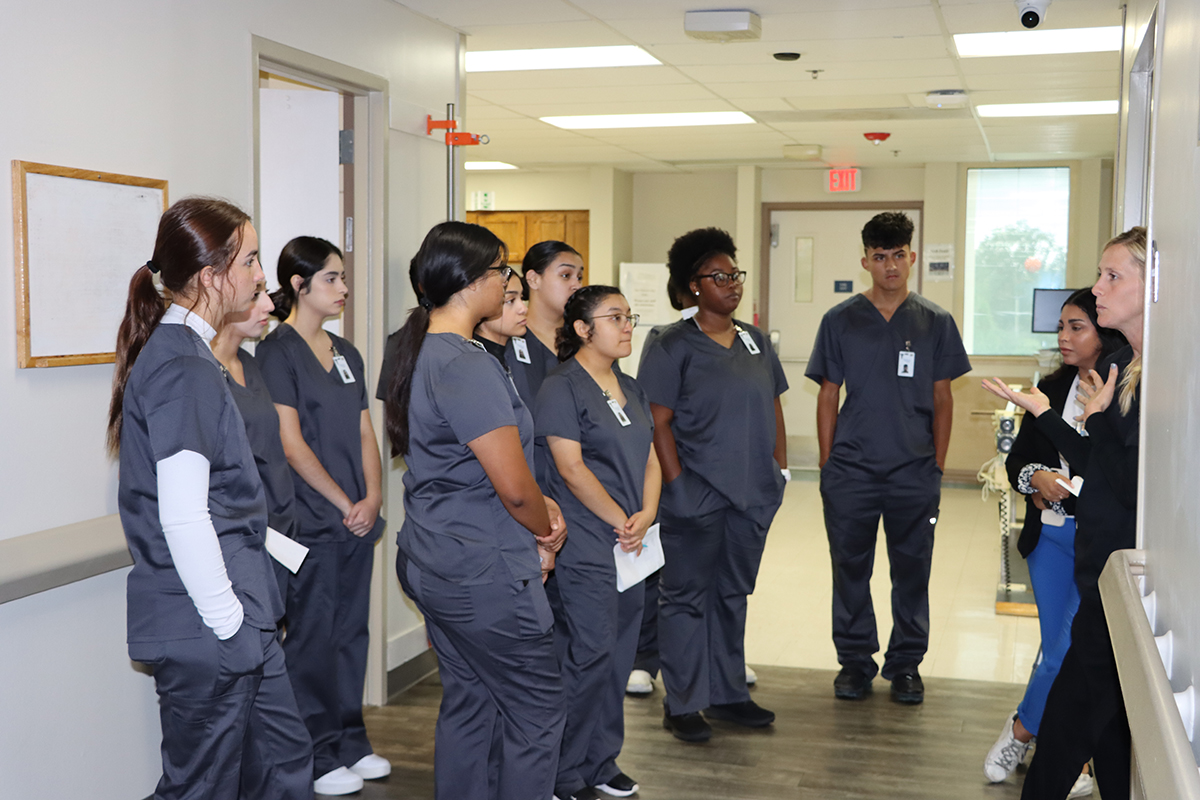
2: Clinical Education Coordinator Elizabeth Alexander (right) and RN Brittney Steen give third-year students an orientation to the Trauma Room at TRMC
3: Third-year students get an orientation to the Emergency Room from Clinical Education Coordinator Elizabeth Alexander (front right) and RN and Emergency Department Clinical Coordinator, Regenia Nabors (back right)
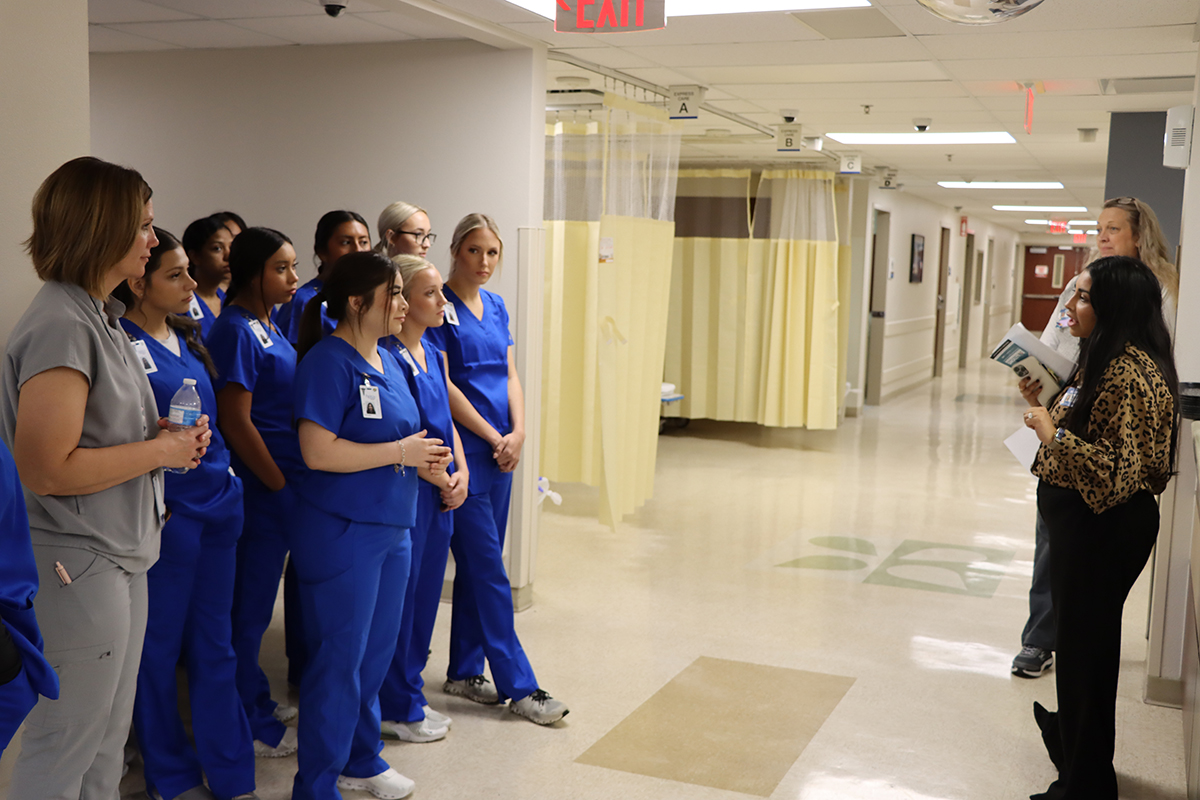
4: RN Jennifer Posey (right) and Clinical Education Coordinator Elizabeth Alexander introduce Emergency Department protocols to third-year students
5: Fourth-year seniors hear about careers in Occupational Therapy from Kayce Duncan, OT
6: Fourth-year seniors get a lesson in the Cath Lab from Specials Tech Adam Larson, RT(R), ARRT
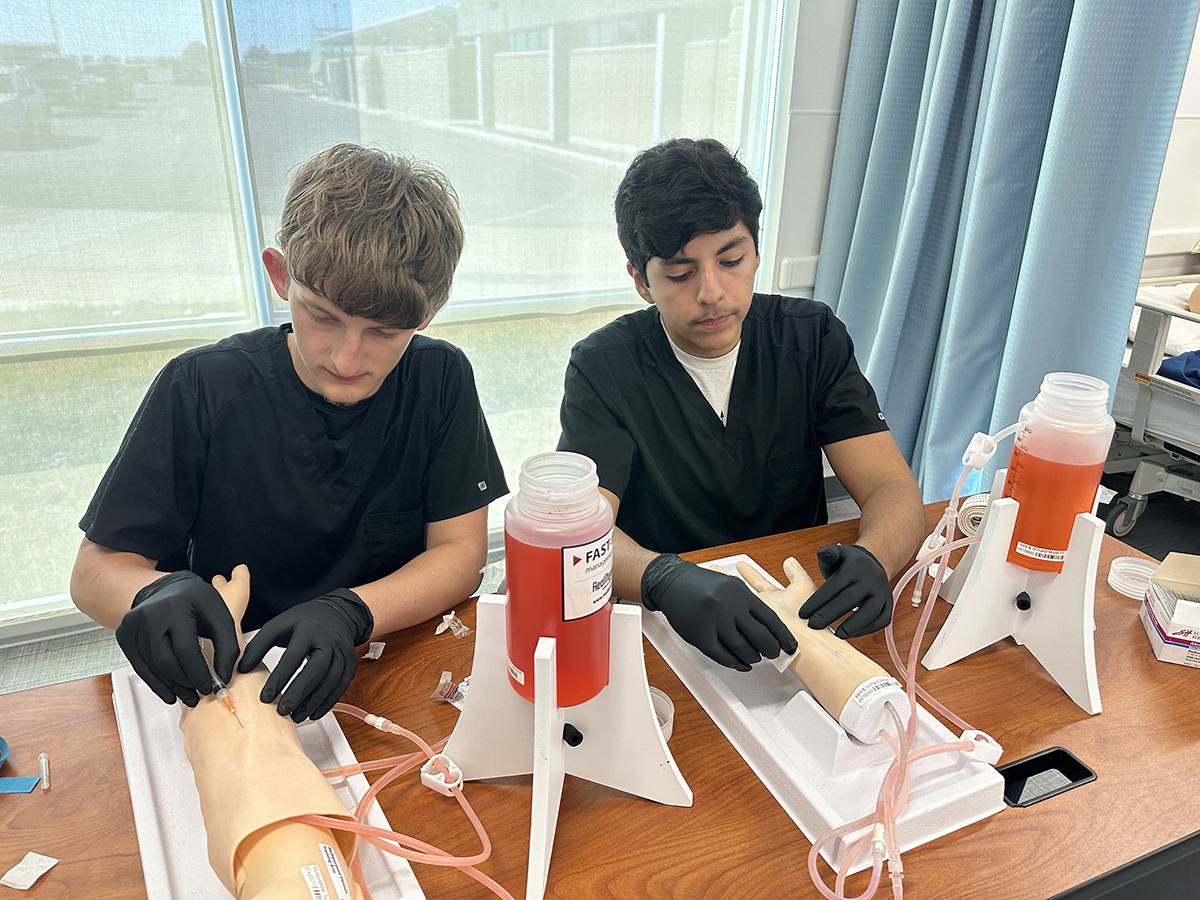
7: Fourth-year seniors Shpat Zeqaj (left) and Nathaniel Martinez practice in the Phlebotomy station in the Health Science Skills Lab at MPHS
Courtney Marshall2023-10-23T13:47:22-05:00
Share This Story, Choose Your Platform!


Leave A Comment