Six MPISD Students Win Medals at Region 8 Science Fair
On Friday, February 20, students representing E.C. Brice, Frances Corprew, Vivian Fowler, Annie Sims, and P.E. Wallace watched an online awards ceremony to learn if they had placed in the Region VIII ESC Science and Invention Fair. Due to the ice storm in January, the Region 8 Science Fair was changed to a virtual format. Students and instructors had to video their presentations and upload them by February 18.
Students conducted research and created their displays on their own time and had five minutes to explain their projects and findings to the judges. Projects could be Behavioral/Biological which would include the study of plants, molds, fungus, bacteria, or human and/or animal responses to the environment, or Chemical/Physical which would study the physical and chemical changes in matter. They could also submit an original invention looking to solve a real problem, satisfy a need, be practical and marketable, and include use of the Scientific Method.
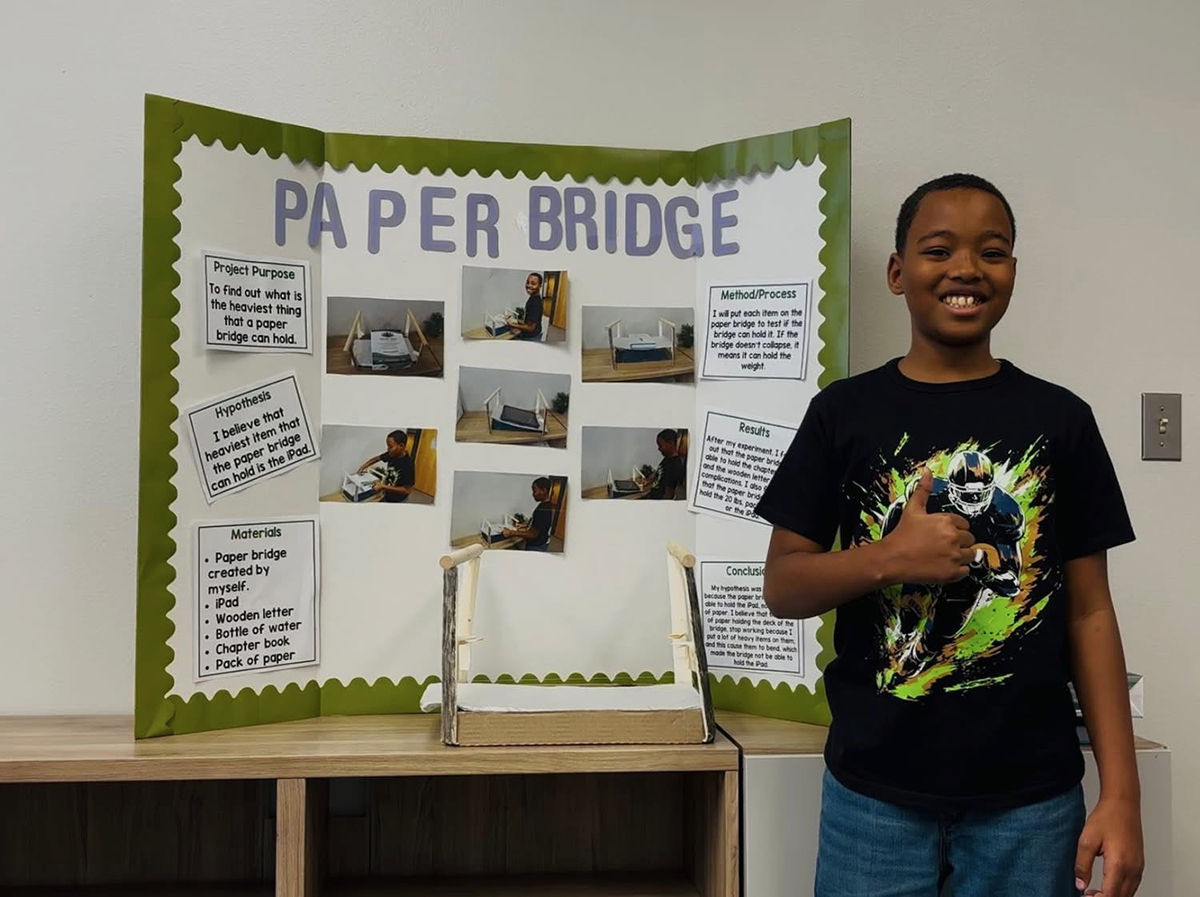
In the Elementary Invention Fair, Shedrick “PJ” Brown placed 2nd with his invention of a bridge made of paper. He tested numerous items to see how much weight his bridge could hold, finding that it could hold the weight of an iPad.
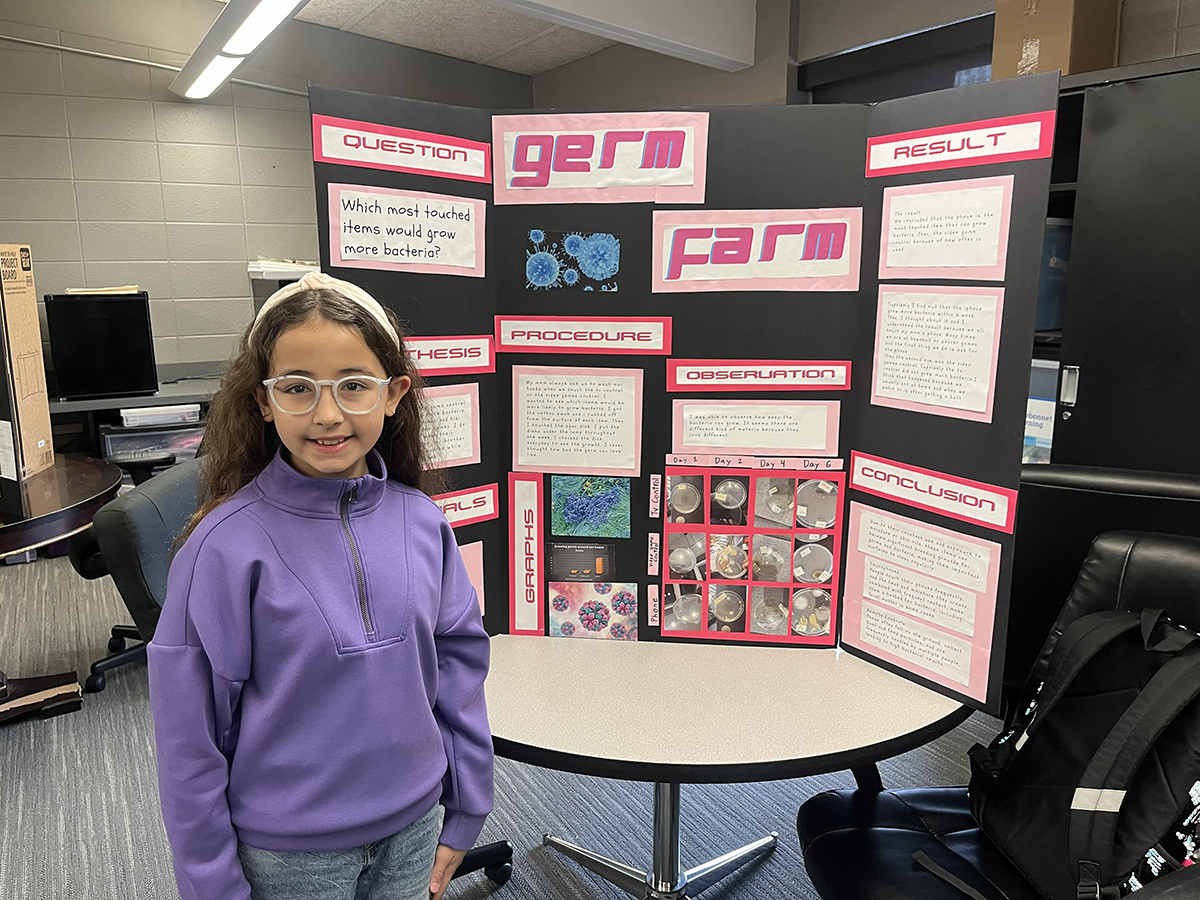
In the 5th grade Behavioral/Biological category, Camila Cates placed 2nd with her project “Germ Farm”. Cates investigated which frequently touched items in her home grew the most bacteria, finding that an iPhone was first, followed by the TV remote control.
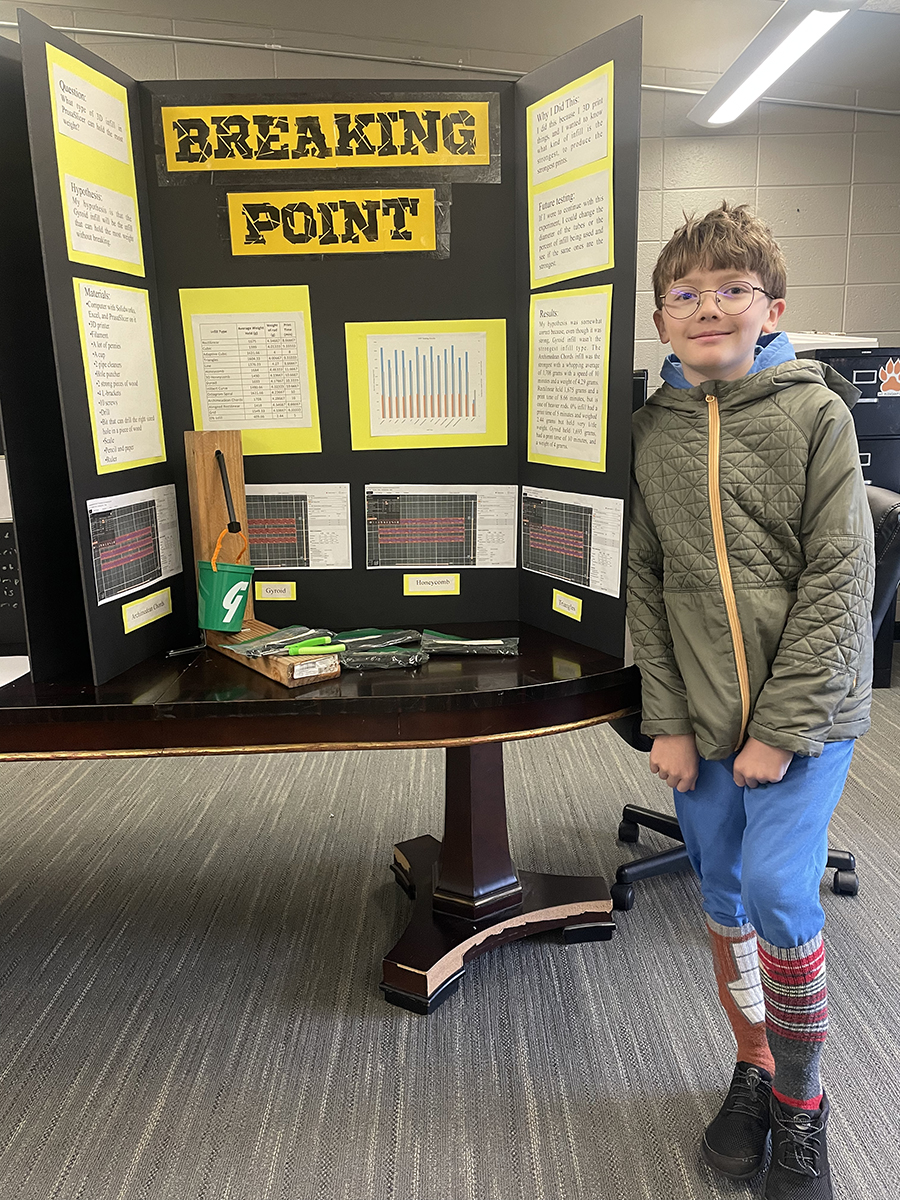
In the 5th grade Chemical/Physical category, Sam Jones placed 2nd with his project “Breaking Point”. Jones tested which 3D printing infill would produce the strongest printed items and found that Archimedean Chords was best.
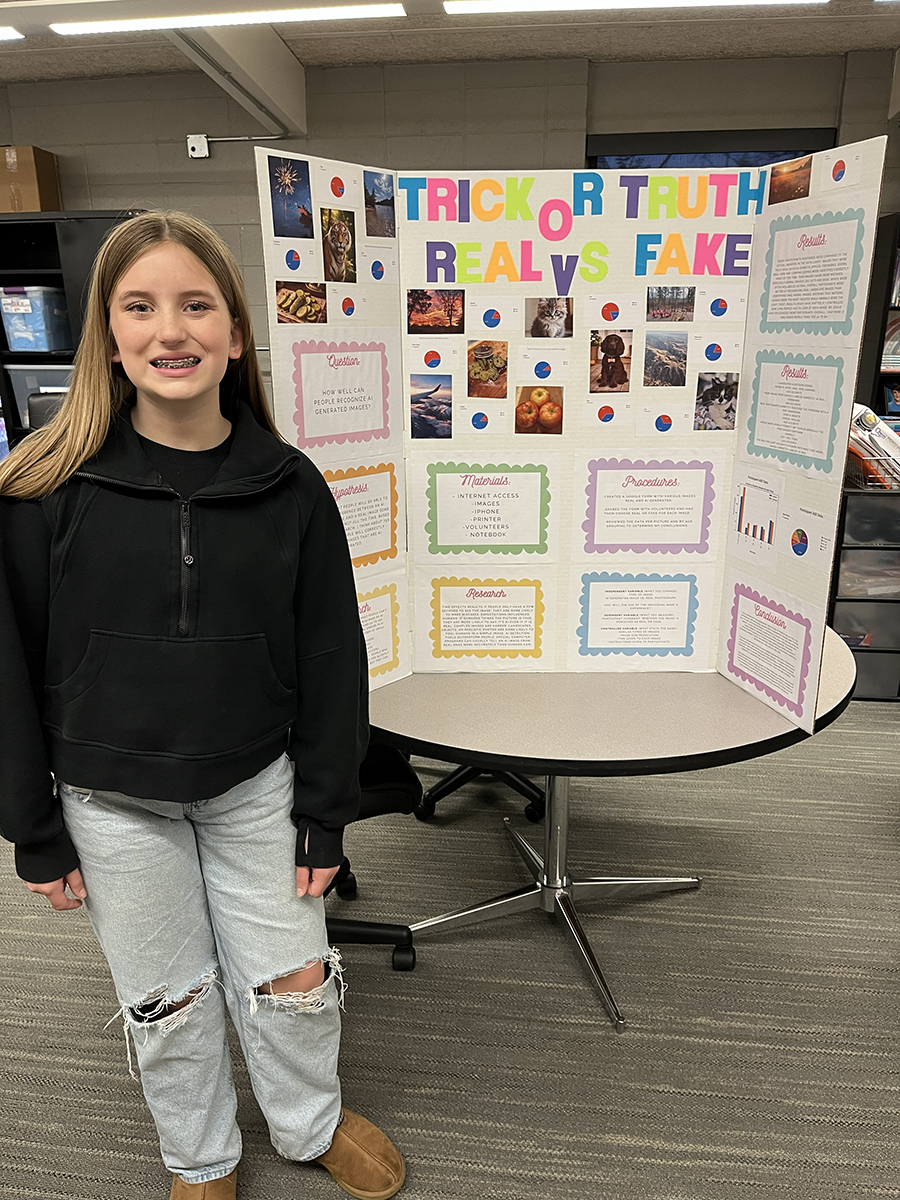
In the 6th grade Behavioral/Biological category, Peyton Glenn placed 2nd with her project “Trick or Truth” which tested people’s ability to identify real versus artificial intelligence (AI) generated photos. She found that overall people had difficulty identifying real vs. AI photos of animals, and that younger people had more trouble correctly identifying real vs. AI photos in general.
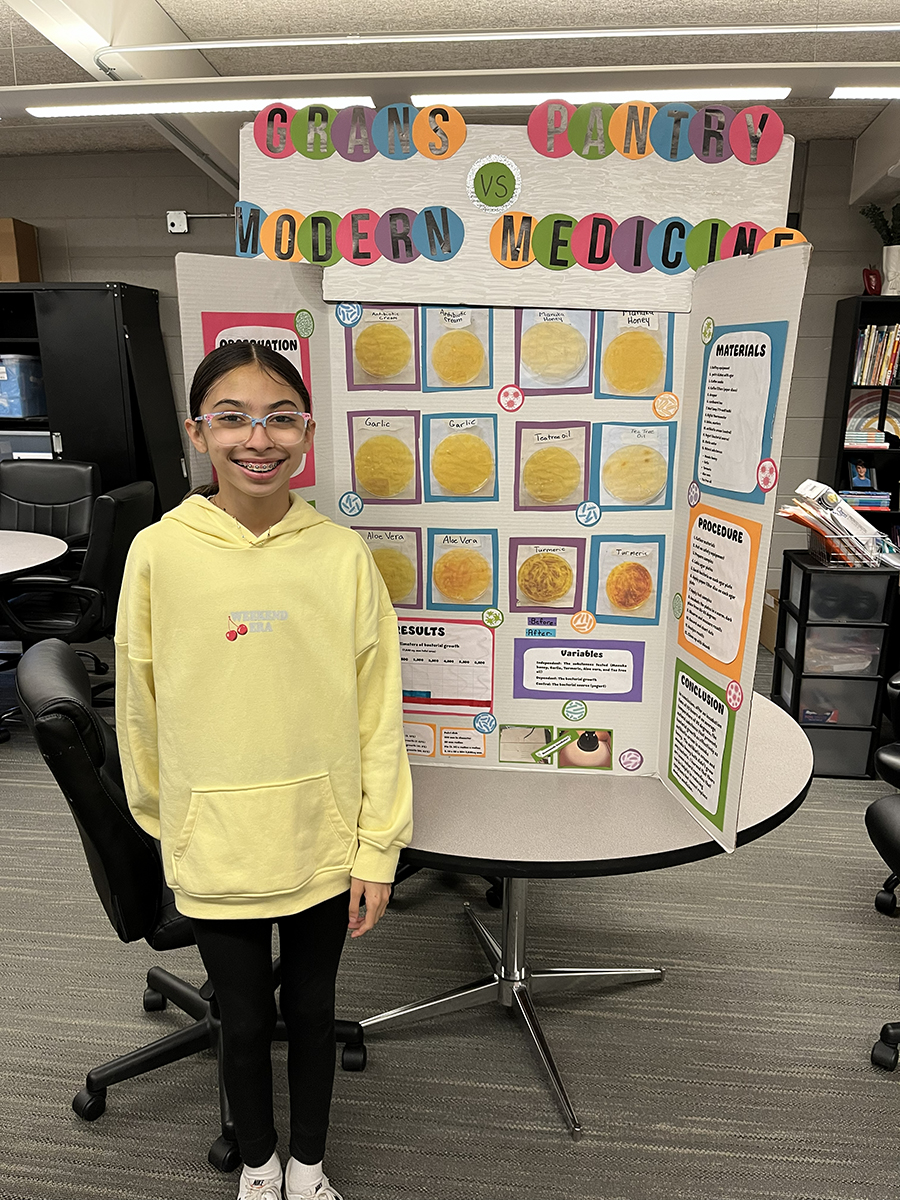
In the 6th grade Behavioral/Biological category, Kinlee Castro placed 3rd with her project “Gran’s Pantry” which investigated natural substances that inhibited bacterial growth finding that Manuka Honey worked the same as an antibiotic cream.
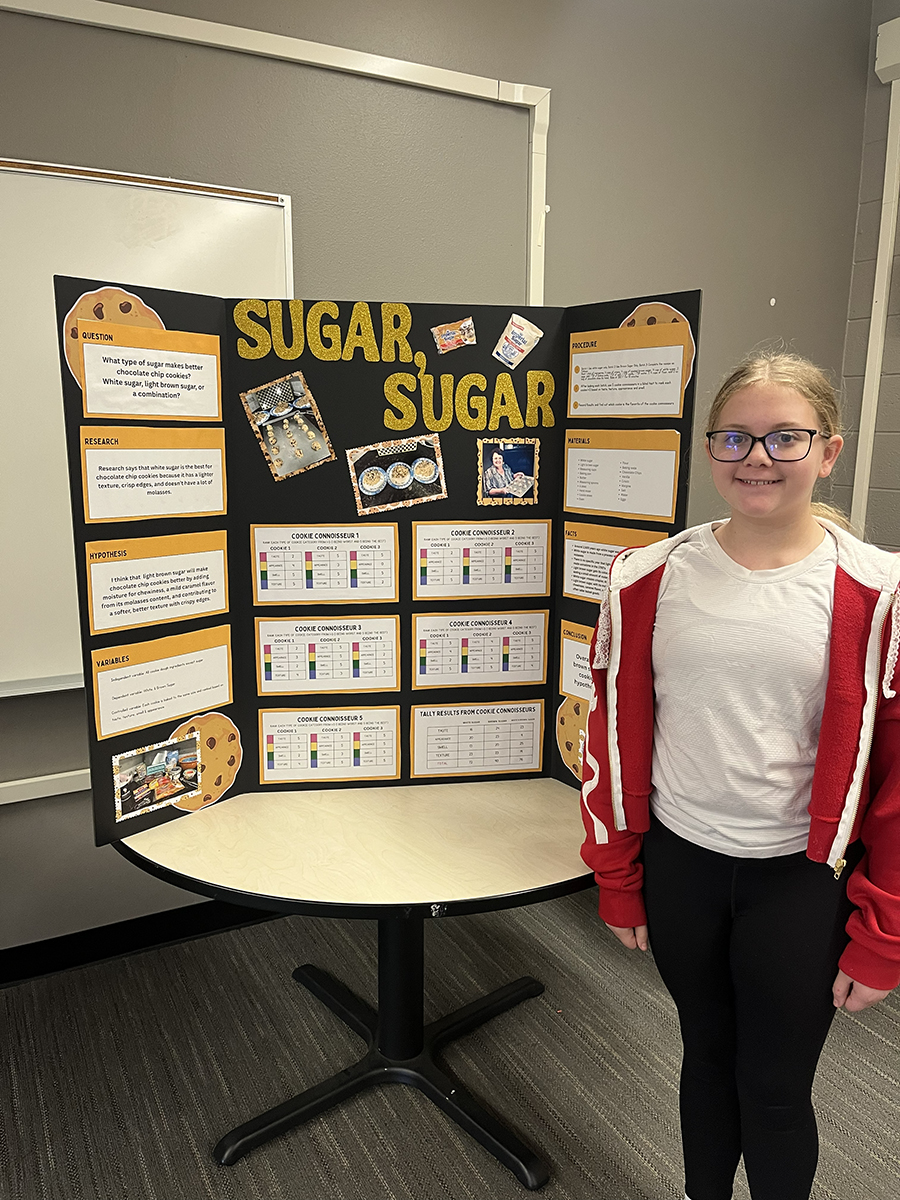
And in the 6th grade Chemical/Physical category, Kate Cluley placed 5th with her project “Sugar, Sugar” which tested white sugar, light brown sugar, and a mixture of both to see which made better chocolate chip cookies. She found that the light brown sugar was better according to the volunteers who agreed to test them.
Photos:
PJ Brown
Camila Cates
Sam Jones
Peyton Glenn
Kinlee Castro
Kate Cluley
Courtney Marshall2026-03-02T12:09:36-06:00
Share This Story, Choose Your Platform!